IPTV vs Cable and Satellite in the UK: Which Wins in 2026?
A plain-spoken UK comparison of streaming, cable and satellite TV in 2026, covering cost, reliability, contracts, picture quality and Sky's shift to Stream.
Contents
Satellite dishes are quietly vanishing from British rooftops, and hardly anyone mourns them. The IPTV vs cable question used to have an obvious script: cable meant Virgin Media, satellite meant Sky. Internet telly was the flaky third option that buffered whenever the neighbours streamed a film. That script is dead in 2026. Broadband in most UK homes now carries live television without drama, and the broadcasters have rebuilt their entire strategies around apps rather than dishes. This comparison scores six rounds: cost, channels, reliability, contracts, installation, picture quality. Streaming wins most of those rounds. It does not win them all, though, and a dish or a cable box still makes sense for a couple of specific households.
One housekeeping point before the scoring starts. Here IPTV means the mainstream services: Sky Stream, Now, Freely, BBC iPlayer, ITVX and the rest of the UK streaming apps — the ones that replace what a dish or a cable box used to do.
IPTV vs cable and satellite: what you are actually choosing
Three delivery routes, one telly. Satellite platforms such as Sky Q and Freesat beam signals from orbit to a dish bolted to your wall. Cable TV UK effectively means Virgin Media, the only cable operator of any real size, which runs its own physical network past roughly half of British homes. IPTV skips both and sends channels down the ordinary broadband line you already pay for.
Freely deserves a special mention because it blurs the old categories. Built by Everyone TV, the joint venture behind Freeview and Freesat, it delivers aerial free TV over your internet connection. The main public service channels arrive live, with no dish, no rooftop hardware and no subscription. That alone tells you which way the industry believes this contest is going.
What each option costs in practice
Entry price is where streaming lands its heaviest punch. Freely costs nothing beyond a compatible TV or box. Now sells Sky’s entertainment and cinema content on passes you can cancel monthly, and Sky Stream’s entry bundles sat around £15-20 a month when we checked July 2026. Traditional Sky Q or Virgin Media packages typically run £30-80 a month once the introductory discounts expire, and the discounts always expire.
The IPTV vs cable maths does carry one asterisk: streaming assumes you already pay for decent broadband. Most households do, so it is rarely a genuine extra cost, but a rural home paying a premium for a slow line should factor it in. Virgin flips this argument by bundling broadband and TV together, which can work out sensibly if you need both anyway.
| Factor | IPTV (Stream, Now, Freely) | Cable (Virgin Media) | Satellite (Sky Q, Freesat) |
|---|---|---|---|
| Typical monthly spend | Free to around £50 | Roughly £30-80 bundled | Free (Freesat) or £30-60 |
| Contract | 31-day rolling options | Usually 18 months | Usually 18 months |
| Installation | Plug a box in yourself | Engineer visit | Dish plus engineer visit |
| Weather risk | None, but needs broadband | Very low | Rain fade in heavy storms |
| Moving house | Box goes in a bag | Only within cable streets | New dish or transfer visit |
Treat every figure in that table as approximate. Deals shift constantly, the ranges above were checked July 2026, and haggling at contract renewal remains the single best money saver on the traditional platforms.
Channels: the gap has closed
For years the killer argument for a dish was simple: Sky Sports lived there and nowhere else worth mentioning. Sky Stream ended that. It carries the same Sky channels, the same sport and the same Netflix integration as a dish subscription, just delivered over broadband. TNT Sports now reaches streamers through discovery+, which quietly removed another reason to keep traditional kit on the wall.
Free streaming has grown up too. Pluto TV, Samsung TV Plus, LG Channels, Rakuten TV, The Roku Channel: all of them offer linear channels that never existed on any dish or cable package. Virgin still does a tidy job of aggregating everything into one box with one bill, and some people happily pay for that convenience. If you want help narrowing down the paid options, our guide to the best IPTV provider does the comparison shopping for you.
Reliability: weather against broadband
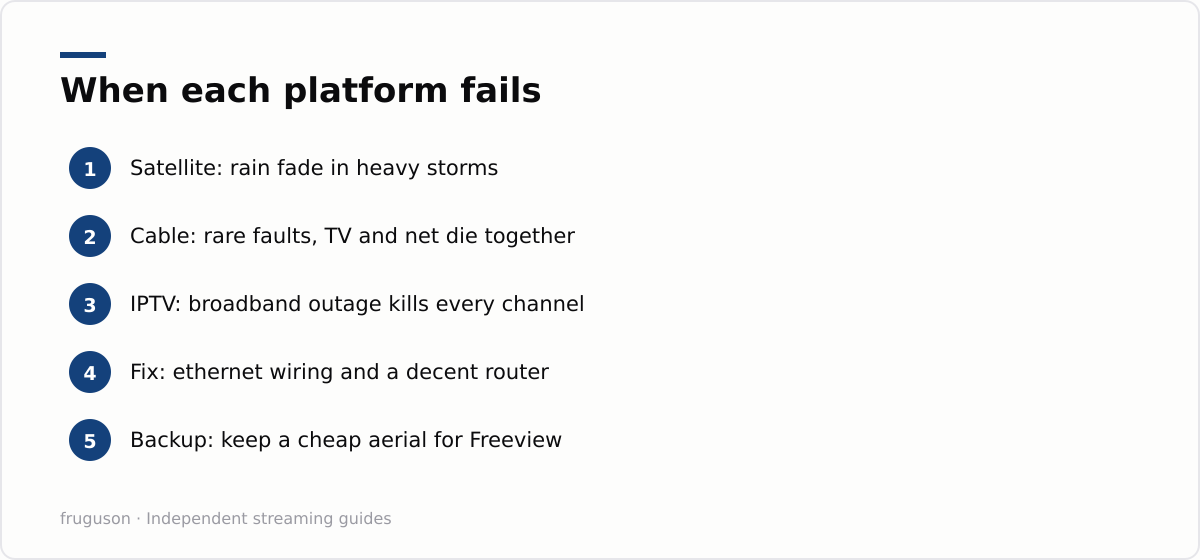
A dish’s weak spot is the sky itself. Heavy rain or snow can degrade the signal, a problem engineers call rain fade, and a storm rolling in at kick-off time is a genuine risk a few times each year. It usually passes within minutes. Snow sitting on the dish can last longer and occasionally involves a broom.
Streaming fails differently. Nothing about the weather touches it, but the whole platform rests on your broadband, so a street cabinet fault or a router meltdown takes down every channel at once. Cable sits somewhere between the two: Virgin’s network is largely weatherproof and faults are uncommon, though when one hits, the TV and the internet die together.
You can shrink the streaming risk with basic kit. Wire the box to the router with an ethernet cable and put the router somewhere sensible rather than behind the sofa. A phone with a decent hotspot allowance makes a crude backup for outage evenings. Our IPTV equipment guide walks through the hardware that keeps streams stable without spending silly money. The satellite TV vs streaming reliability contest is honestly a draw: satellite fails briefly and predictably in storms, while streaming fails rarely but completely during outages. Keeping a cheap aerial connected as a Freeview fallback is the pragmatic answer for both camps.
Contracts and the install hassle
Here streaming is playing a different sport altogether. A Sky Stream puck or a streaming stick arrives in the post and you are watching within ten minutes, with no engineer visit and no drilling. Rolling 31-day terms are available across most streaming services, so a disappointing service loses your money next month rather than in eighteen months.
Dishes involve permissions as well as hardware. Renters generally need landlord consent, and flats or conservation areas can add planning complications on top. Virgin installs need an engineer and, more fundamentally, need Virgin’s network to exist in your street at all. Moving house shows the same gap: a streaming box goes in a bag, while satellite and cable both mean fresh admin and usually another install visit.
Picture quality and the sport lag
Broadcast picture is consistent by design. A dish or cable feed arrives at a steady bitrate whatever the internet is doing, and plenty of videophiles still respect that. Streams adapt to your line instead, which cuts both ways. On a healthy connection, 4K HDR from Sky Stream or Netflix comfortably beats the ageing HD encodes many broadcast channels still use. On a congested evening, a stream can visibly soften while broadcast sails on untouched.
Sport adds one honest caveat: latency. Streams typically run seconds behind the broadcast feed, so a neighbour’s cheer or a phone notification can spoil a goal before you see it. If that ruins live football for you, it is a real point in favour of the old technology, and no marketing copy changes it.
Where Sky is pointing, and why it matters
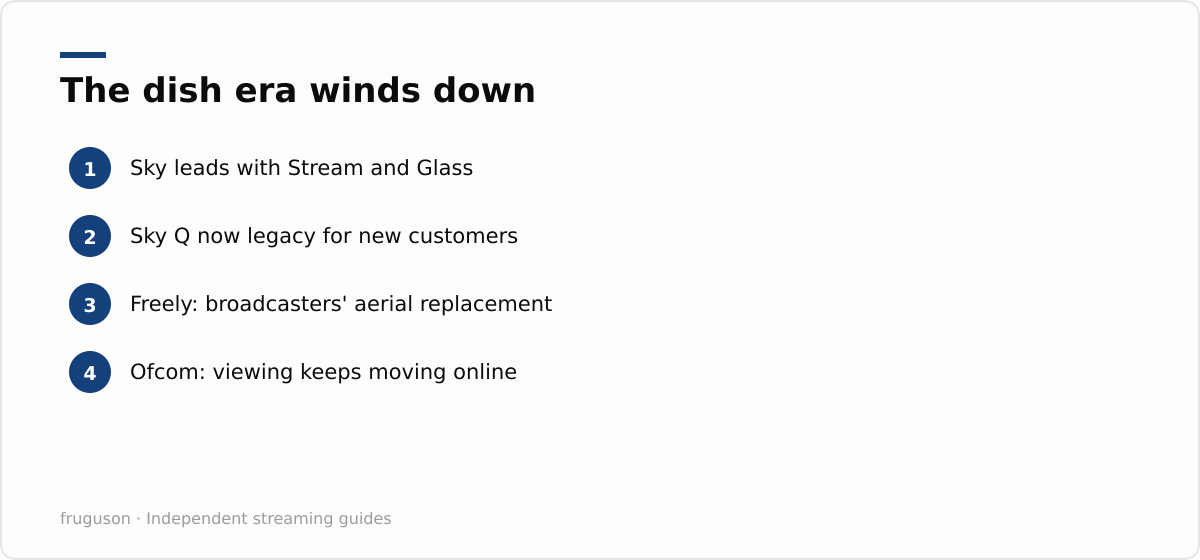
Sky’s own shop window settles any argument about direction. Sky Glass and the Sky Stream box sit front and centre of its TV range, while dish-based Sky Q has drifted into legacy territory for new customers. A company that built its brand on satellite dishes now leads with a broadband product, which tells you the dish era is winding down by attrition rather than by any official switch-off date.
Audience numbers point the same way. Ofcom’s Media Nations research has tracked viewing shifting from broadcast channels to internet delivery year after year, with the change sharpest among younger viewers. Freely exists precisely because the public service broadcasters read those numbers early and built their aerial replacement before the audience finished leaving.
Verdict: let your broadband decide
Test your connection before anything else. A line that reliably holds 25Mbps or more at peak time makes streaming the sensible default for most households: cheaper entry, flexible monthly terms, self-install hardware and apps that actually get updated. Start free with Freely or the broadcaster apps, then trial a month of Now for premium content. If you never miss the dish, the decision has made itself.
Poor broadband changes the answer completely. Freesat remains a genuinely good free platform for homes stuck on slow lines, and a Virgin bundle earns its place where the network exists and one combined bill appeals. For anyone shopping the streaming route, our roundup of the best IPTV services ranks the licensed options by value. Give the £40-a-year merchants a wide berth whatever you choose; a service with no licence has no refund desk, and the football tends to disappear exactly when it matters most.
Frequently asked questions
Is streaming as reliable as a satellite dish?
For most homes, yes. A dish can drop briefly in heavy rain or snow, while a good broadband line stays rock solid — but streaming fails completely if the connection goes down, where satellite keeps working. On a steady 25Mbps-plus line streaming is the more dependable of the two day to day.
Can I still get Sky Sports without a satellite dish?
Yes. Sky Stream carries the same Sky Sports channels as a dish subscription, just delivered over your broadband instead of from orbit, and TNT Sports reaches streamers through discovery+. The one caveat is latency: streams typically run a few seconds behind the broadcast feed, so a neighbour's cheer can beat a goal to your screen.
Is satellite TV being switched off in the UK?
There is no official switch-off date, but the direction is clear. Sky now leads with Sky Stream and Sky Glass rather than dish installations, and the broadcasters built Freely as an internet replacement for the aerial. Expect satellite to fade gradually through the late 2020s rather than end overnight.
Summarize this post with:
Follow How To Watch Streaming on Google News so you never miss a new guide.
Leave a comment